
What hardscaping covers
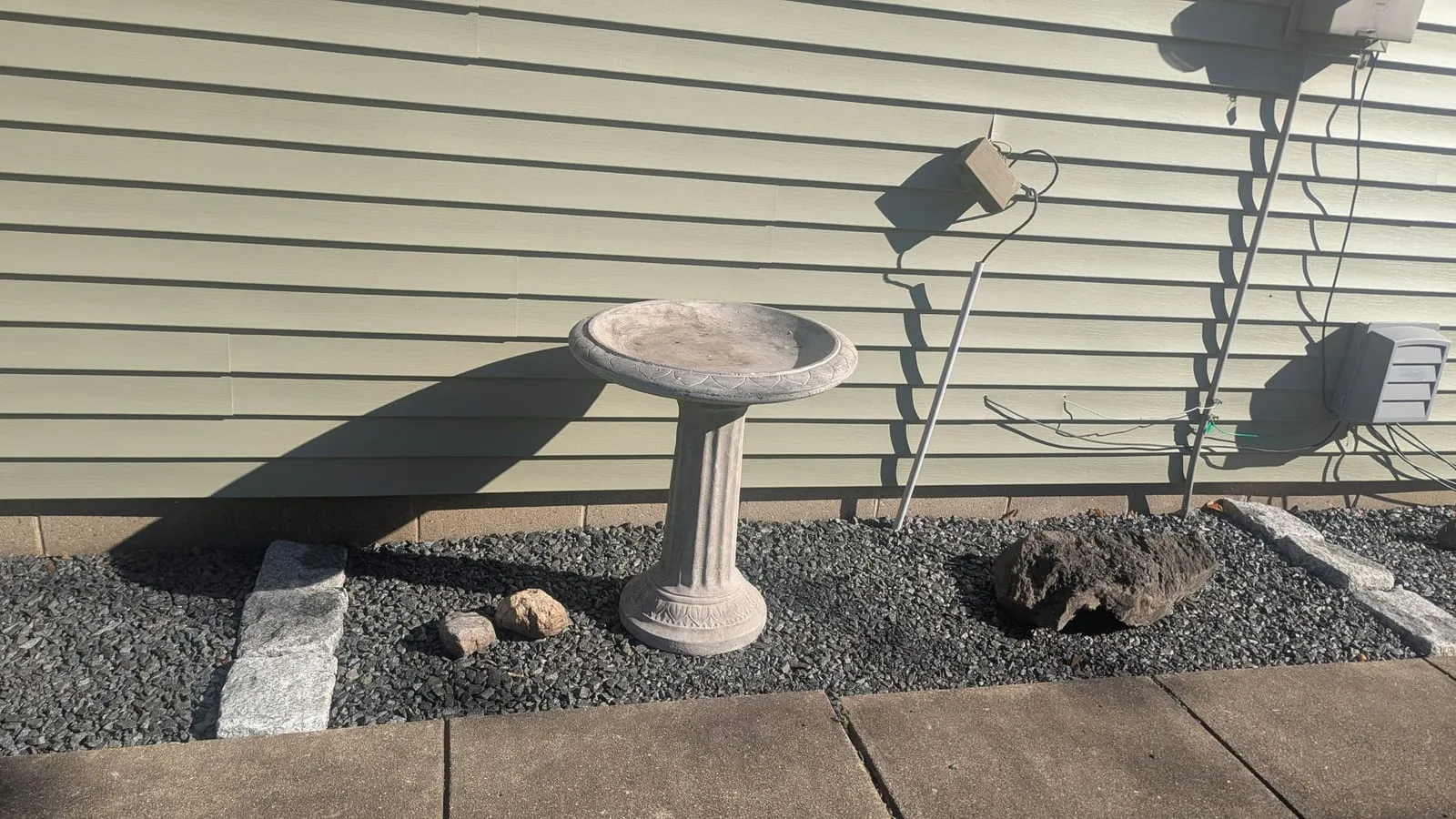
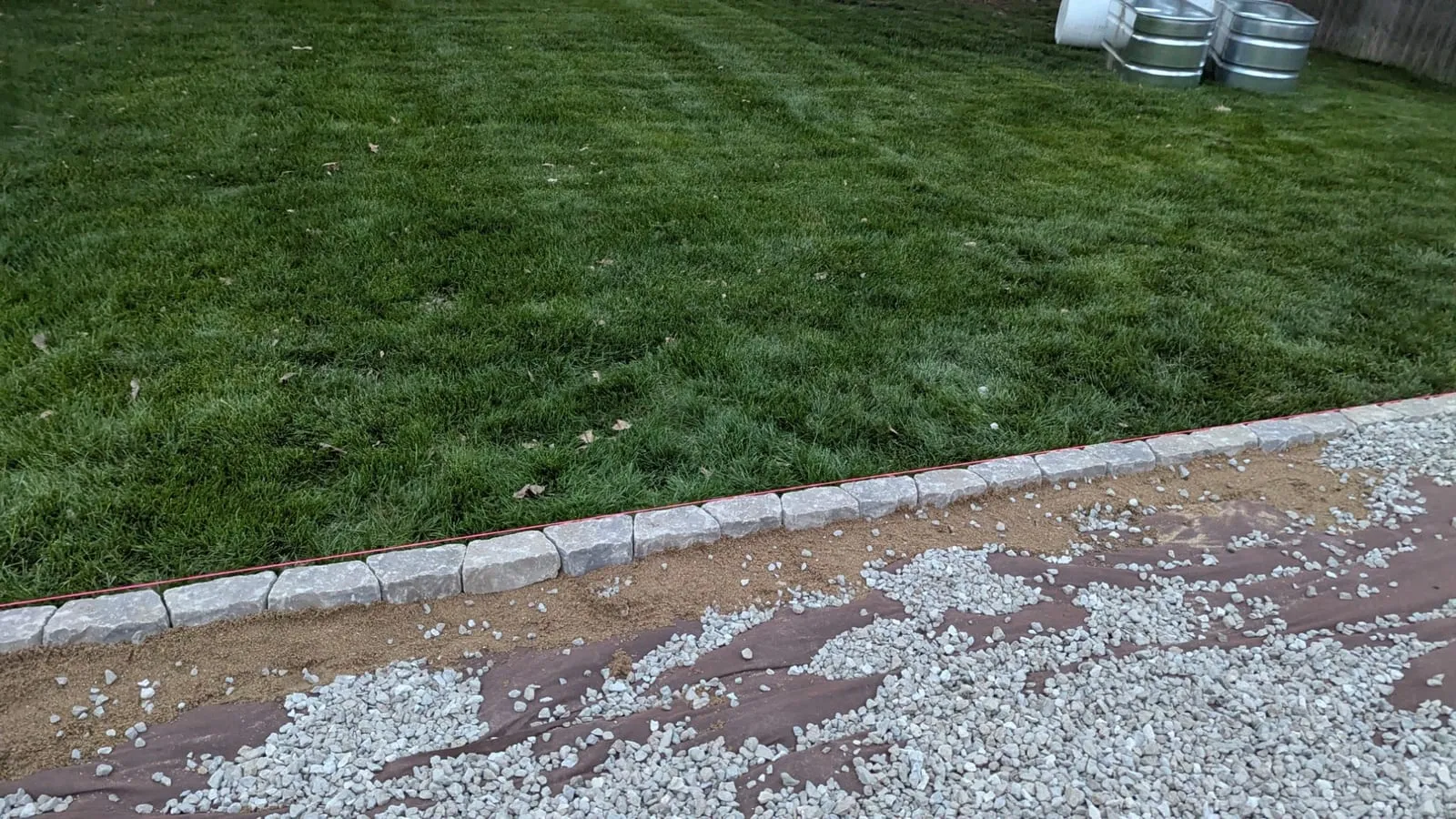
Hardscaping is the part of a yard that isn’t growing: the stone, gravel and paving that sits between the lawn, the planting beds and the house. Russel’s Mowing and Services lists three kinds of hardscaping on its current site: patios, walkways and retaining walls. Rock beds and stone edging, like the one in the photo on this page, belong to the same family of work.
The business is based in Villa Grove, and the team works across Douglas County and Champaign County. That takes in small-town yards and rural properties as well as city and subdivision lots in the larger communities of Champaign County.
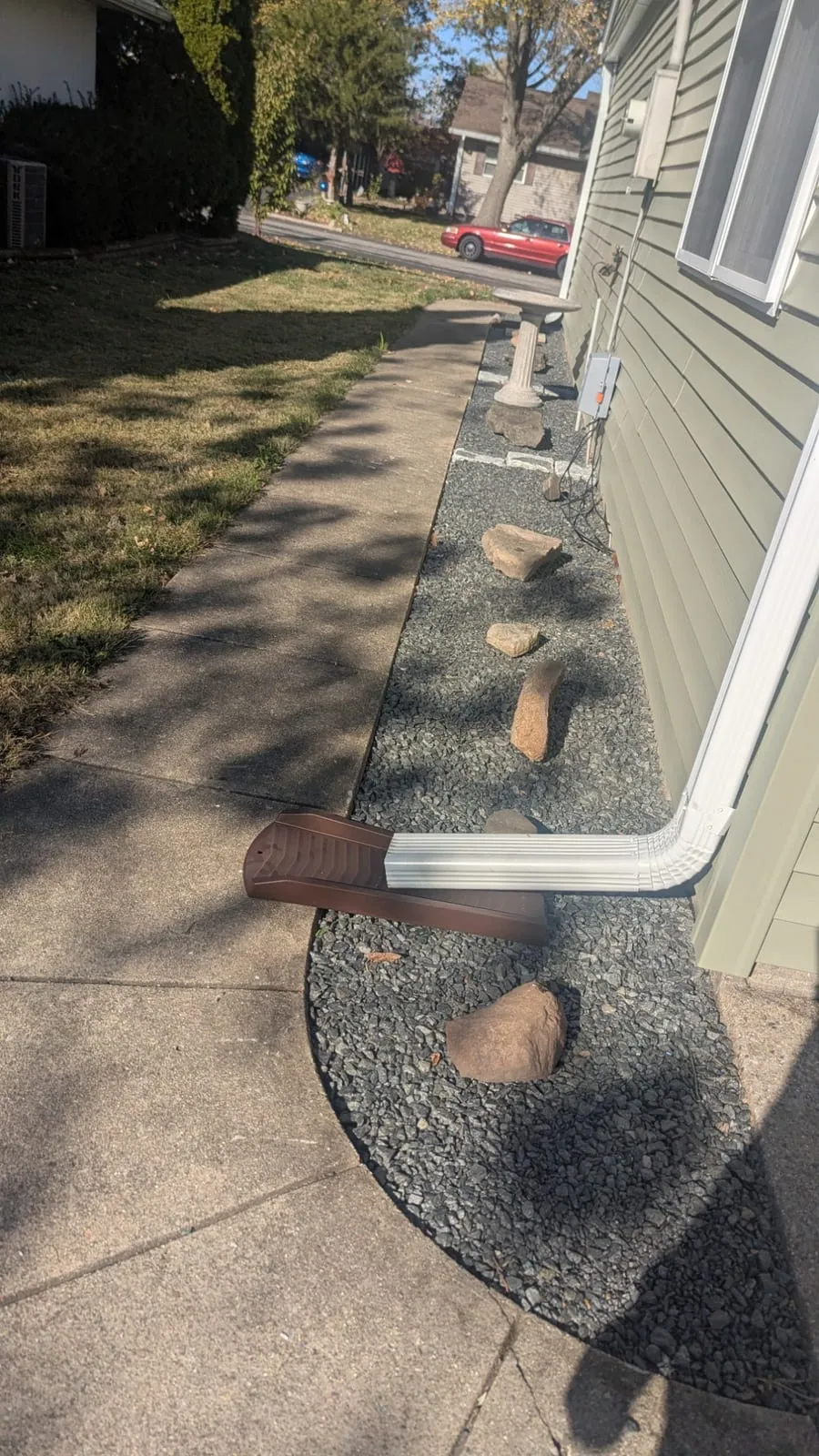
The photo comes from the business’s own gallery. It shows a finished rock bed: dark gravel laid along the siding of a house, held in by a stone edge, with a birdbath and a boulder set into it. It is a small, practical piece of hardscaping, and it shows what most of this work comes down to: a clean, lasting line between the lawn, the bed and the house.
Where hardscaping fits in a yard
Most yards in Central Illinois have a few spots where grass struggles, or where a harder surface simply works better than turf. Common examples:
- The strip along the foundation, where the roof drips, the mower scrapes the siding and the grass stays thin.
- A worn line across the lawn from the driveway to the back door, or from the house to a shed.
- A slope or raised bed where soil washes down after heavy rain.
- A spot by the back door that turns to mud every spring.
- Planting beds that keep losing their shape because the lawn creeps in.
Each of these has a hardscape answer: a rock bed, a walkway, a retaining wall, a patio or a stone edge. Which one makes sense depends on how the space is used and how water moves across it.
The kinds of property it suits
Hardscaping works on most kinds of residential property in the two counties. On a small-town lot, one walkway or a rock bed along the house can change how the yard works day to day. Larger subdivision lots often have room for a patio or a longer path. Rental properties tend to do well with low-maintenance surfaces, like gravel beds that don’t need replanting every year. And for anyone who can’t do heavy digging and lifting, hardscaping is often the first part of yard work worth handing off.
The main types of hardscaping
Patios
A patio is a flat, hard surface next to the house or out in the yard, used for sitting, grilling or setting out a table. The work usually means marking out the area, removing the sod and soil, building a firm base, laying the surface and finishing the edges so the lawn meets it cleanly.
Walkways
A walkway gives a dry, steady route across the yard: from the driveway to a door, from the back door to a garden or shed, or around the side of the house. It follows the same basic steps as a patio on a narrower footprint. A path that follows the line people already walk tends to get used. One that doesn’t tends to get cut across, and the grass beside it wears out anyway.
Retaining walls
A retaining wall holds soil back where the ground changes height. In a home yard that usually means a low wall around a raised bed, along a slope beside a driveway, or where a patio sits into rising ground. As a rule, a retaining wall needs a solid, level footing and a way for water to drain out from behind it. Without those, soil pressure and frost movement slowly push it out of line.
Rock beds and stone edging
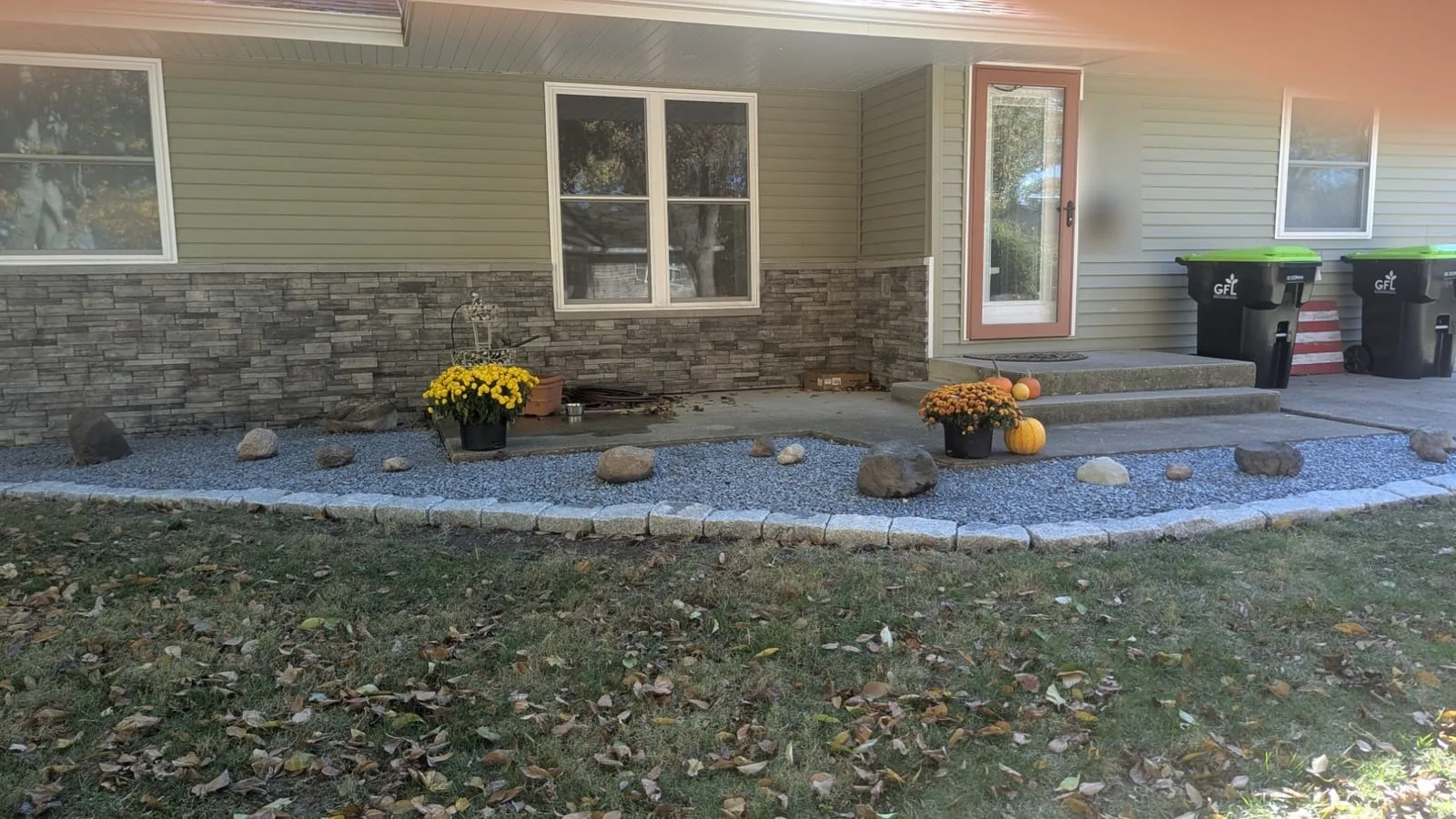
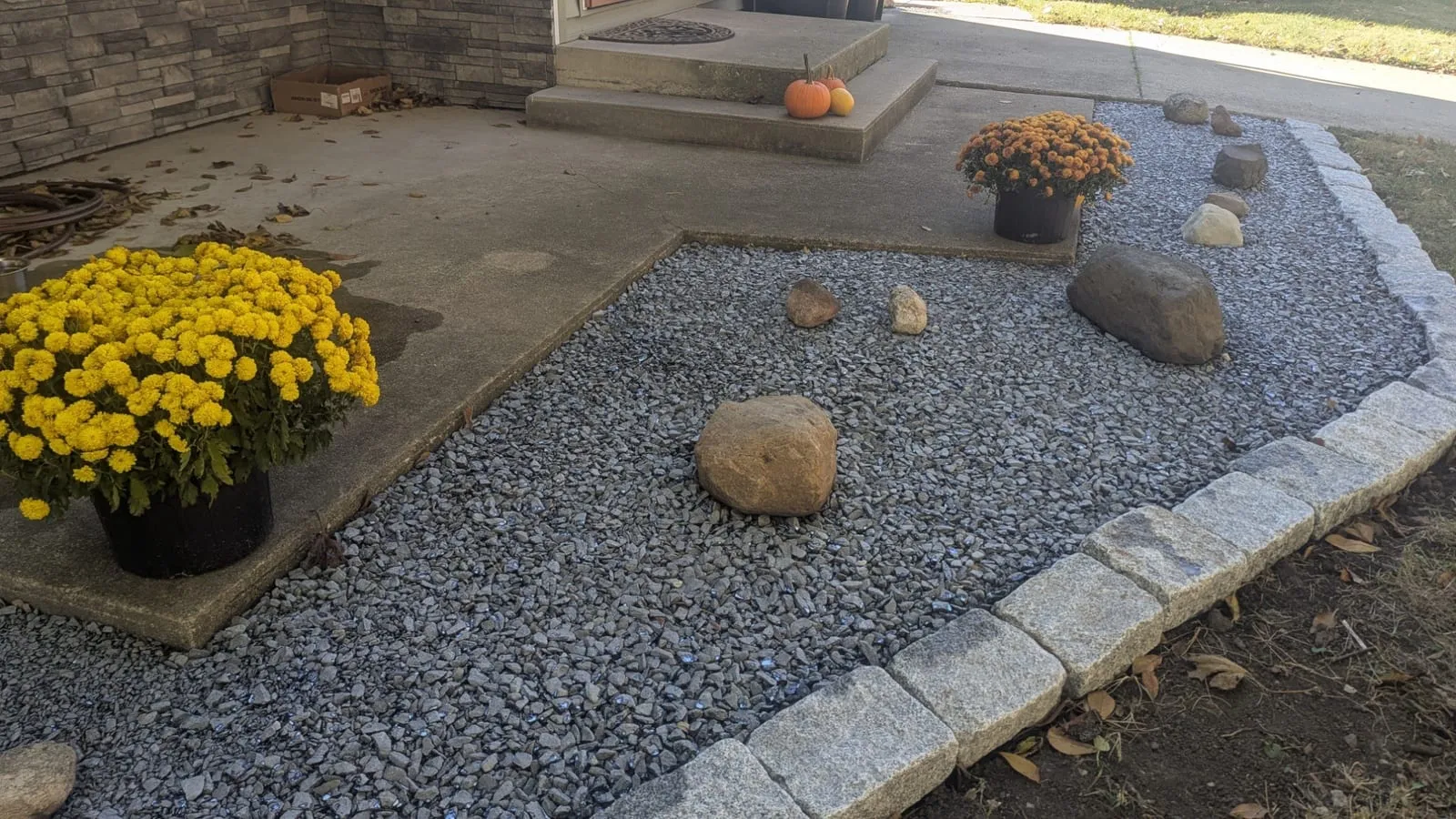
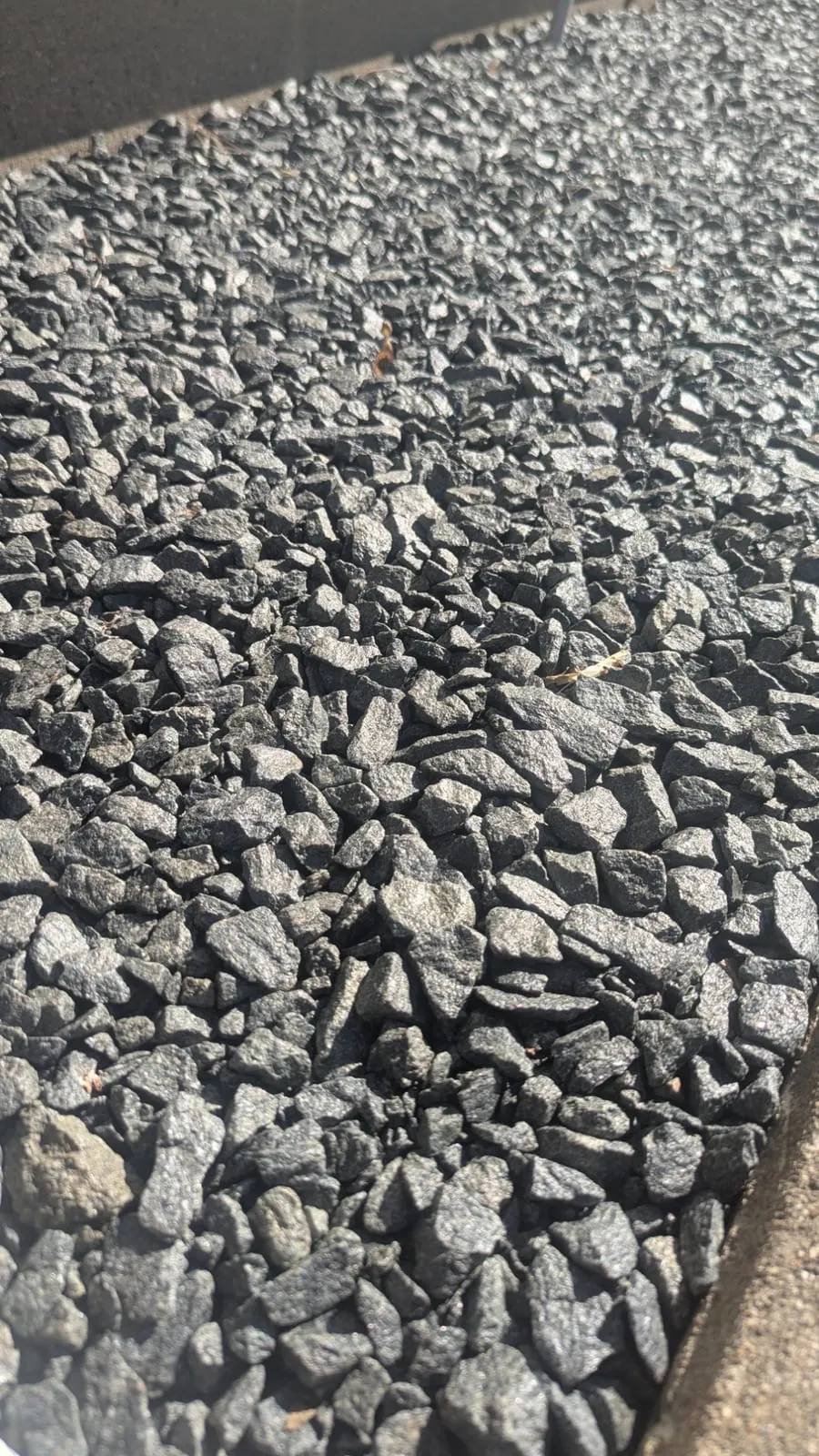
A rock bed uses gravel or decorative stone in place of mulch or grass, often along the foundation of the house. Stone edging keeps the rock in the bed and the lawn out of it. Rock does not break down the way mulch does, though it still needs occasional weeding and a top-up where it thins. For a softer, planted look, mulch installation is the other common choice for beds.
What a hardscaping job usually involves
Every yard is different, so the steps vary from job to job. As a general outline, a hardscaping project runs something like this:
- Look at where water runs, where the ground slopes, where people walk and where the downspouts empty.
- Call 811 a few days before any digging in Illinois so buried lines are marked.
- Outline the patio, path, wall or bed so the shape and size can be checked before any sod comes up.
- Dig out sod and soil to the needed depth, then build a compacted base that keeps the surface level through the seasons.
- Lay the stone, pavers, gravel or rock and set each piece level.
- Set the edging, fill joints, backfill the sides, tidy the lawn edge and clear away leftover soil and debris.
Materials, sizes and finishes are worth talking through when the job is looked at, since they shape both the result and the quote.
Central Illinois conditions and timing
Local soil and weather matter more for hardscaping than for almost any other yard job. The points below are general guidance for the region.
Heavy soil and drainage
Much of Central Illinois sits on dark, heavy prairie silt-loam. It is good for growing grass but slow to drain, and it holds water after rain. For hardscaping that means:
- A proper base matters. Hard surfaces laid straight onto heavy soil tend to sink and tilt.
- Water needs somewhere to go. As a rule, a patio next to a house should slope slightly away from the foundation, commonly around a quarter inch per foot.
- Downspouts should empty away from new beds and paths, not onto them.
Freeze and thaw
Winters here freeze and thaw many times. Water trapped under a patio or behind a wall expands when it freezes and lifts the surface a little each time. Good drainage and a firm base are the main defense against heaving and cracked edges.
When to do the work
Hardscaping is generally done when the ground is neither frozen nor soaked.
- Early spring is often too wet, and working saturated soil compacts it into a poor base.
- Late spring and summer are usually dry enough for digging and laying.
- Fall works well too, because it is the most reliable time to reseed cool-season grass. Lawn disturbed along the edges can fill back in before winter.
Planning a hardscaping project
A bit of planning before the first call makes the conversation quicker and the quote more accurate. Some things worth thinking through:
- Think about how the space will be used, since a patio for a small table needs far less room than one for a grill and gatherings.
- Consider how often a path will be walked, because one used every day needs a steadier surface.
- Pace out the rough length and width, or mark the area with a hose or string.
- Check whether equipment and material can reach the spot through a gate or along the house, or only across the lawn.
- Watch where water pools after heavy rain and where the downspouts send it, since that often decides placement.
What to ask when you call
- Which kind of hardscaping suits this spot: a patio, a walkway, a rock bed or a wall?
- What kind of base will go under it, and how deep is the dig?
- How will water drain away from the finished surface?
Looking after hardscaping
Hardscaping is low-maintenance, not no-maintenance. A few habits keep it in good shape:
- Pull weeds from gravel and joints while they are small.
- Keep the mower’s discharge pointed away from rock beds, so stones aren’t thrown.
- Keep gutters clear, so overflowing water doesn’t wash out beds and paths.
- Walk the patio, paths and walls each spring and look for any sinking or shifting after the winter.
- Top up gravel where it has thinned or spread into the lawn.
How hardscaping is quoted
Each hardscaping job is quoted on its own. The quote depends on the yard and the job: the size of the area, how much digging it takes, the materials, and how easy it is to get equipment to the spot. It is confirmed once the job has been looked at or talked through.
Related work around the yard
Hardscaping often goes hand in hand with planting. A new walkway or rock bed usually changes the beds around it, and landscaping covers flower beds and shrub arrangements that fit alongside the stonework. Regular mowing and trimming keep the edges between the lawn and the hardscape crisp once the work is done.
Russel’s Mowing and Services works across Douglas County and Champaign County. If your address is anywhere in either county, call or text to check whether it is on the route.
Getting a quote
Call or text (217) 729-1112 for a quote on a patio, walkway, retaining wall or rock bed, or use the quote form on the contact page. It helps to describe the space, roughly how big it is and what it is used for, so the job can be looked at or talked through before the quote is given.
Photos from hardscaping jobs
We also serve these areas
Hardscaping is available to homes across Champaign and Douglas counties.