
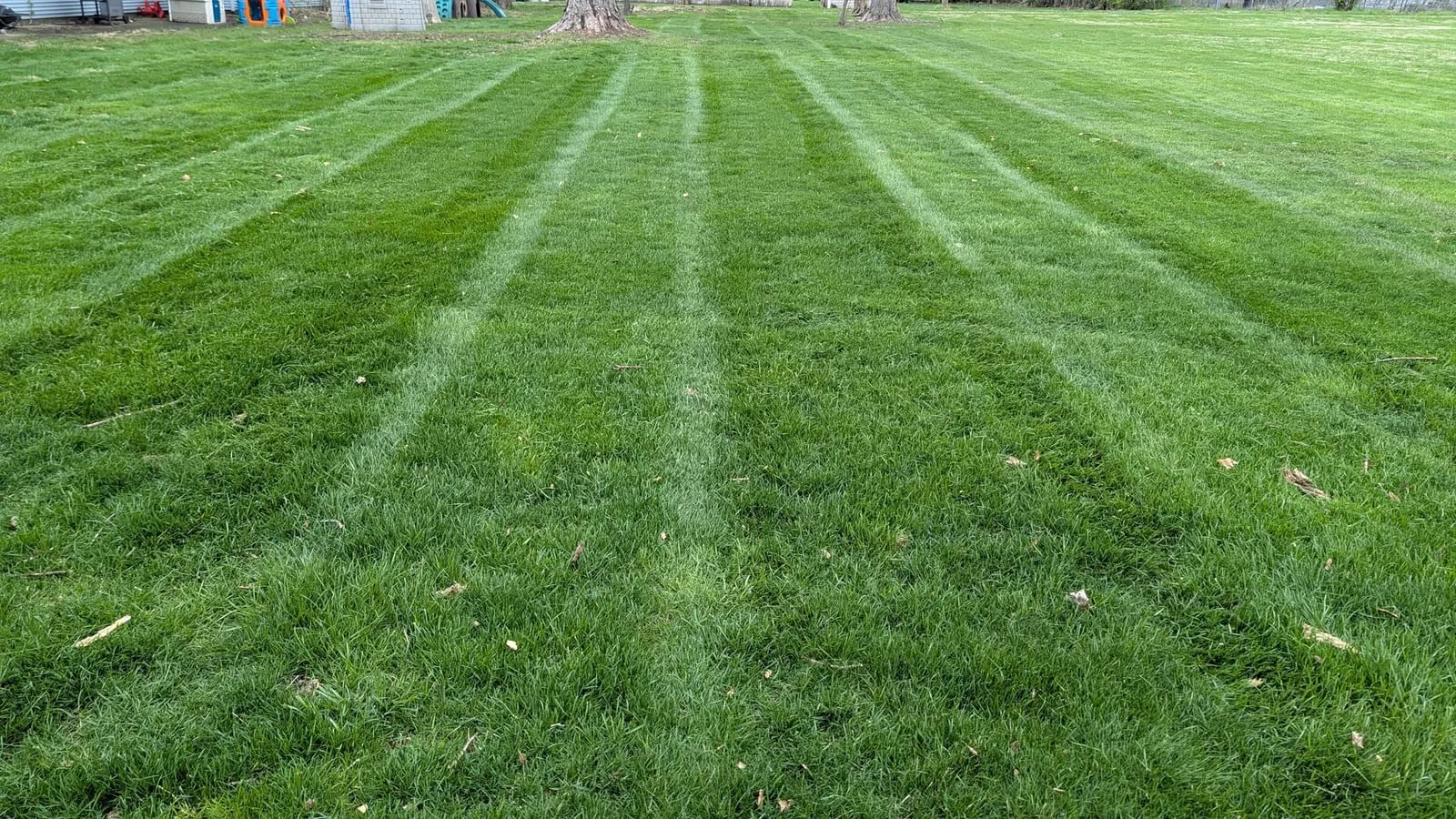
What grass seeding covers
Grass seeding is spreading new seed where a lawn needs it. That can be a few bare patches, a thin area under a tree, a strip along a driveway that got torn up, or a whole lawn that has thinned out over time. The service is also listed as “grass application”.
Russel’s Mowing and Services is based in Villa Grove and works in Douglas County and Champaign County. Grass seeding is offered alongside mowing, fertilizer and cleanup work, and it often follows other jobs in the same yard.
Lawns that can use seeding
Seeding suits many kinds of yards in the two counties, from small-town lots to subdivision lots, city yards and rentals. Common reasons for seeding include:
- Bare spots left by a dog, a play area or a path worn across the yard
- Thin grass that has slowly given way over several seasons
- Patches that died out in a hot, dry summer
- Ground left bare after a bed, a shed or a pile of brush was removed
- Strips along sidewalks and driveways that take a beating
- A rental lawn that needs to be brought back between tenants
What the work includes
The exact steps depend on the lawn and the size of the area. As a rule, grass seeding covers:
- The crew checks how bare or thin the area is, how much sun it gets and how it is used.
- Loose debris and dead material are cleared, and bare soil is loosened so seed can reach it.
- Seed is spread evenly over bare spots, thin areas or the whole lawn.
- The seed is lightly raked or pressed in so it makes good contact with the soil.
What kind of seed suits your lawn is talked through when you call or text (217) 729-1112 for a quote. This service is surface seeding over prepared soil. It does not include aeration or slit seeding.
Seeding timing in Central Illinois
Most lawns in Central Illinois are cool-season grasses: Kentucky bluegrass, tall fescue and perennial ryegrass, often in a mix. Timing makes a big difference to how well new seed takes.
Late summer to early fall: the prime window
In Central Illinois, late summer to early fall is the most reliable time to seed a cool-season lawn, roughly mid August through September. The soil is still warm, which helps seed sprout quickly. The air is cooling off, which is easier on young grass. Weeds are slowing down, so there is less competition. New grass then has the rest of the fall and the following spring to root in before summer heat arrives.
Spring: the second choice
Spring seeding can work, and it is the second choice when fall is missed. The drawbacks are that young grass has only a few months to root before the heat and dry spells of July and August, and that spring is also when many weeds sprout. As a rule, the earlier in spring the seed goes down, the better its chances.
One thing to watch: if a crabgrass preventer has been put down on the lawn in spring, it can also stop new grass seed from coming up. Check before seeding.
Shade and soil
Grass under mature trees often thins out because of shade and competition from tree roots. As a rule, fine and tall fescues handle shade better than Kentucky bluegrass, but even shade-tolerant grass needs a few hours of light. Heavy prairie silt-loam soil in Central Illinois holds moisture well, which helps new seed, but it can crust over on bare spots after hard rain, so loosening the surface first matters.
Summer: generally avoid
Midsummer seeding in Central Illinois is hard going. Heat and dry spells make it difficult to keep seed moist, and young grass struggles. Most general guidance is to wait for late summer.
Getting the yard ready
A few simple steps before seeding day help the job go well:
- Mow the existing grass a little shorter than usual beforehand so seed can reach the soil in thin areas.
- Move toys, hoses, furniture and anything else sitting on the spots to be seeded.
- Point out low spots, areas that stay wet and paths with daily traffic, since they affect how seed holds up.
- Check that a hose or sprinkler can reach the seeded areas, because new seed needs steady moisture.
- Mention any crabgrass preventer or weed killer applied in the last few months, since it can affect new seed.
Caring for new seed
The weeks after seeding decide how it turns out. Some general guidance:
- Water lightly once or twice a day in dry weather until the seed sprouts, then water less often and more deeply.
- Keep foot traffic, pets and play off newly seeded areas so young grass isn’t scuffed out.
- Wait until new grass reaches about 3.5 to 4 inches, then cut it to around 3 inches with a sharp blade.
- Expect perennial ryegrass to sprout quickly, tall fescue a little later and Kentucky bluegrass in two to three weeks or more.
- Keep mowing at 3 to 3.5 inches afterward, never removing more than a third of the blade at once.
Light, frequent watering works better than an occasional heavy soak while seed is sprouting. A sharp mower blade matters on young grass because a dull one pulls seedlings out instead of cutting them cleanly.
The lawn care calendar has more seasonal notes for Central Illinois yards.
How the quote works
Every seeding job is different, so the quote depends on the yard. The main things that affect it are the size of the area, how bare it is and how much preparation the soil needs. The details are confirmed as part of the quote.
When you call or text, it helps to mention:
- Whether it is a few spots, one section or the whole lawn
- Roughly how large the area is
- How much sun or shade it gets
- What caused the bare or thin patches, if you know
- Whether you would also like the lawn fed in the same season
Related services and areas
Seeding and feeding often go together in fall, when cool-season grass is growing hard. Fertilizer application is the related service. Regular lawn mowing at the right height helps new grass fill in, and ground opened up by brush removal is a common place to seed.
The crew works across Douglas County and Champaign County. More about the county that is home base is on the Douglas County page. If you are not sure whether your address is on the route, call or text to check.
Getting a quote
For a grass seeding quote, call or text (217) 729-1112. It helps to mention whether it is a few spots or the whole lawn, roughly how large the area is and how much sun it gets. You can also use the quote form on the contact page.
We also serve these areas
Grass Seeding is available to homes across Champaign and Douglas counties.