
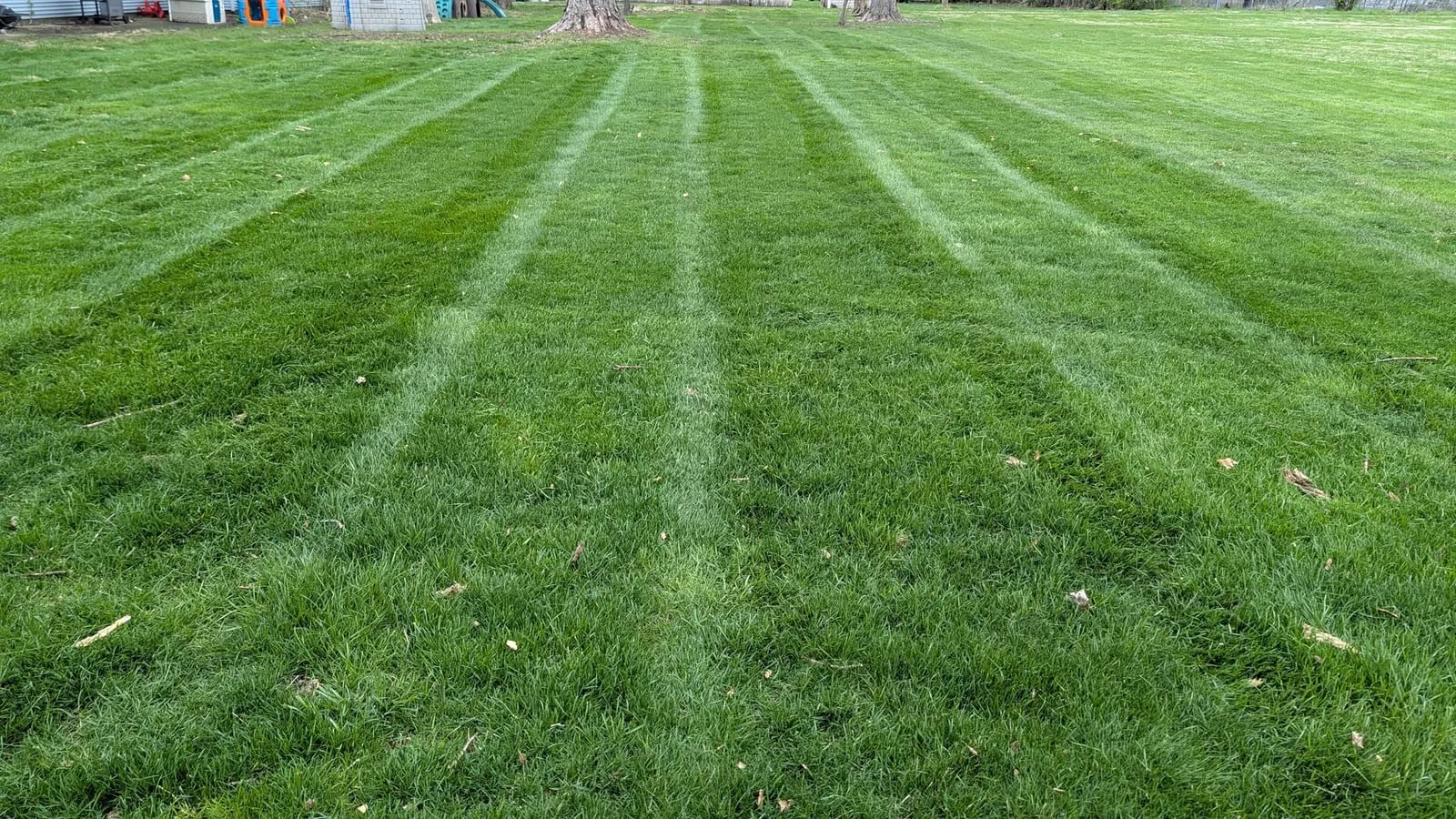
What fertilizer application is
Fertilizer application is feeding the lawn. Grass uses nutrients from the soil as it grows, and a lawn that is mowed all season with the clippings bagged, or one growing in worn-out soil, can run short. A measured, even application of lawn fertilizer at the right times of year helps the grass grow thicker and hold its color.
Russel’s Mowing and Services is based in Villa Grove and works in Douglas County and Champaign County. Fertilizer application is offered as its own service, and it can be booked alongside regular mowing.
This service is lawn fertilizer only. It is not a weed control or pest control program.
Who it’s for
Fertilizer application suits most lawns in the two counties, from small-town yards to subdivision lots and larger city lots. It is a practical fit for:
- Lawns that look pale, thin or slow to green up in spring
- Yards that are mowed regularly and could use feeding to keep up
- Lawns recovering from a hot, dry summer
- Newer lawns that are established and ready for regular feeding
- Rental properties where the landlord wants the lawn kept in good condition
- Households where nobody has a spreader or the time to use one
What the work includes
As a rule, a fertilizer application covers:
- The crew looks over the lawn’s size, the condition of the grass and anything that affects the job, such as newly seeded areas.
- Fertilizer is spread in a steady, even pattern so there are no heavy strips or missed patches.
- Granules on driveways, sidewalks and patios are swept or blown back onto the lawn so they don’t wash into storm drains.
Timing for the application is talked through when you call or text (217) 729-1112 for a quote, since it depends on the season and the condition of the lawn.
Why even coverage matters
Fertilizer that goes down unevenly shows up in the lawn a few weeks later. Heavy strips can grow faster and darker than the rest, and missed strips stay pale. Overlapping passes in one spot can also burn the grass, especially in warm weather. A steady, even pattern gives the whole lawn the same start, so it greens up and grows at the same pace from one side of the yard to the other.
Signs a lawn may need feeding
Some general signs that a cool-season lawn could use fertilizer:
- The grass is a pale or yellowish green even when it has had enough water
- The lawn is slow to green up in spring compared with others nearby
- The turf is thin, and bare soil shows between the blades
- Growth is weak in spring and fall, when cool-season grass should be growing well
Not every pale lawn is short on nutrients. Drought, compacted soil, heavy shade and mowing too short can all cause similar symptoms, so it helps to look at the whole picture.
Fertilizer timing for cool-season lawns in Central Illinois
Most lawns in Central Illinois are cool-season grasses: Kentucky bluegrass, tall fescue and perennial ryegrass, often in a mix. These grasses grow hardest in spring and fall, slow down in summer heat and dry spells, and go dormant over winter. Fertilizer timing follows that pattern.
Fall is the most important feeding
For cool-season lawns, general guidance is that fall is the most valuable time to fertilize. In Central Illinois, an application in early fall, around September, supports the second growth flush and helps the lawn recover from summer. Many lawn guides also suggest a later fall feeding once top growth slows down but before the ground freezes, which helps the roots store energy for winter and an early green-up the following spring.
Spring: go easy
Lawns in Central Illinois green up and grow quickly on their own in spring. A heavy early spring feeding pushes top growth, which means more mowing, without doing much for the roots. As a rule, a lighter application in late spring is enough for most lawns.
Summer: generally hold off
In the heat of July and August, cool-season grass slows down and may go partly dormant in dry spells. Pushing it with fertilizer then can stress it. General guidance is to skip or keep summer feeding light, especially on lawns that are not watered.
A few more rules of thumb
- Skip frozen ground and days right before heavy rain, when fertilizer can run off instead of soaking in.
- Sweep any granules that land on hard surfaces back into the lawn.
- Mow at 3 to 3.5 inches and never take more than a third of the blade, so a fed lawn stays thick.
- Leave clippings on the lawn where you can, since they return some nutrients to the soil.
- Consider a soil test for a lawn that doesn’t respond to regular feeding, since it shows what the lawn actually needs.
The lawn care calendar has more seasonal guidance for Central Illinois yards.
Getting the yard ready
A little preparation makes the application go smoothly:
- Mow a day or two before so granules reach the soil instead of sitting on long grass.
- Pick up toys, hoses and yard furniture so the lawn is easier to cover evenly.
- Point out anything that should be skipped, such as newly seeded areas, vegetable gardens and beds.
- Let the grass dry, since granular fertilizer goes down best on a dry lawn followed by light watering or rain.
- Keep pets and kids off the lawn for as long as the product label recommends.
How the quote works
There is no set figure for every lawn. The quote depends on the yard, mainly the size of the lawn, its condition and how many applications make sense over the season. The details are talked through when you call or text for a quote.
When you call or text, it helps to mention:
- Roughly how large the lawn is, front and back
- How the grass looks now: pale, thin, patchy or healthy
- Whether any part of the lawn was seeded recently
- Whether the lawn is watered in summer
- Whether you want a single application or feeding across the season
Fertilizer alongside mowing
If the crew already mows the yard, fertilizer can be applied around the regular visits. It also pairs naturally with grass seeding in fall and a spring cleanup at the start of the season. Each is quoted separately.
Related services and areas
Fertilizer does the most good on a lawn that is also mowed well, and regular lawn mowing is the core of the business. For bare or thin spots that feeding alone won’t fill, grass seeding is the related service, and seeding and fall feeding often line up in the same part of the year.
The crew works across Douglas County and Champaign County. If you are not sure whether your address is on the route, call or text to check. More about the larger of the two counties is on the Champaign County page.
Getting a quote
For a fertilizer application quote, call or text (217) 729-1112. It helps to mention roughly how large the lawn is and whether you would like other work, such as mowing or seeding, done too. You can also use the quote form on the contact page.
We also serve these areas
Fertilizer Application is available to homes across Champaign and Douglas counties.