
What a spring cleanup is
A spring cleanup clears away what winter leaves behind, so the lawn and beds can start the growing season clean. In plain terms it means picking up sticks and fallen branches, clearing out leaves that blew in or were missed in the fall, and removing dead growth from beds before new growth comes through.
Russel’s Mowing and Services does spring cleanups across Douglas County and Champaign County. The business is based in Villa Grove, and the crew’s work covers small-town lots as well as larger city and subdivision yards in Champaign County.
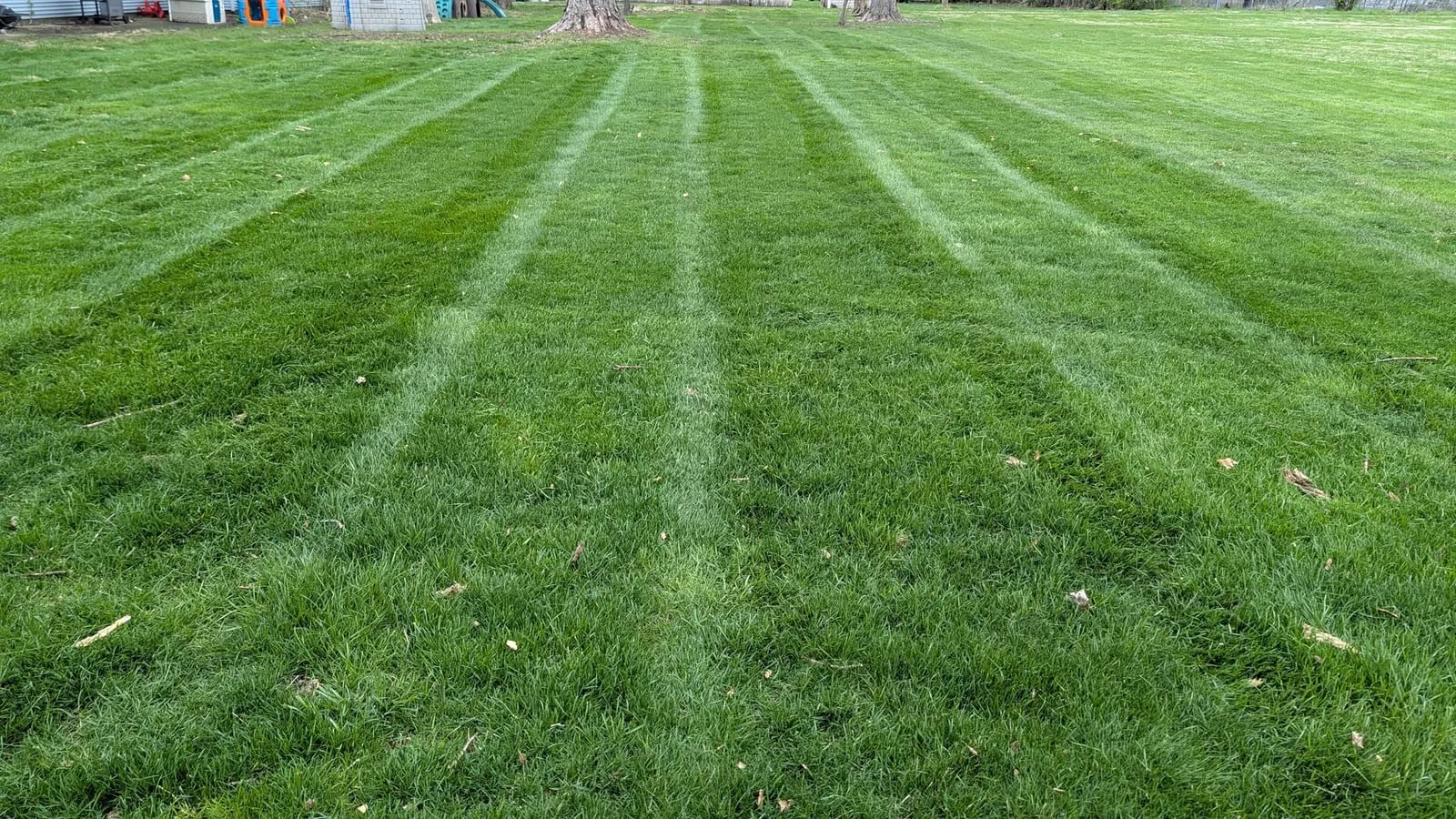
The photo on this page is from the business’s gallery: a back lawn freshly mowed in clean alternating stripes, with mature trees around it. That is the point of a spring cleanup. Once the debris is gone, the first cuts of the year can go down evenly.
Which yards need one
Almost every yard in Central Illinois comes out of winter with some mess. A spring cleanup is especially useful for:
- Yards with mature trees that drop sticks and branches in winter storms and hold leftover leaves along fences and beds.
- Small-town lots where leaves from neighboring trees collect in corners and against the house.
- Subdivision lots with foundation beds and ornamental grasses that need their dead growth cleared.
- Rental properties that need to look cared for at the start of the season.
- Households that can’t do the bending, raking and hauling, or don’t have time in a busy spring.
What the work includes
A spring cleanup sticks to the jobs the name plainly implies. Typical tasks:
- Sticks, fallen branches and litter are picked up off the lawn.
- Leaves that sat on the lawn, in beds or along fences over winter are cleared.
- Dead leaves and old growth are removed from flower and shrub beds.
- Last year’s dead perennial stems and ornamental grasses are cut back, where that hasn’t been done already.
- Debris is cleared off walks and driveways, and bed edges are tidied so they read clearly again.
What the lawn looks like afterwards
With the debris gone, the lawn itself is easier to read. Thin patches, spots where snow or leaves sat for weeks, and areas of winter damage along driveways and walks all show up more clearly. That makes it easier to judge what else the yard needs this season. Beds look sharper too, with their edges visible again and new growth clear of last year’s dead stems.
Exactly what’s included for a given yard is something to confirm when you call or text (217) 729-1112 for a quote. Other jobs, like mulch, seeding or brush removal, are separate services and are quoted on their own.
When to do a spring cleanup in Central Illinois
Timing matters more than it seems. The general guidance below applies to cool-season lawns across the region.
Wait for the ground to firm up
Early spring in Central Illinois is often wet, and the heavy, dark prairie silt-loam soils here hold water. Walking and working on a soaked lawn compacts the soil and can tear up the turf. As a rule, it pays to wait for a cleanup until the ground is firm enough that footprints don’t sink in and stay there.
Before the grass takes off
Kentucky bluegrass, tall fescue and perennial ryegrass have a strong growth flush in spring. The ideal cleanup lands before that growth gets going, so leaves and debris aren’t shading the new grass and the first mow isn’t held up by sticks and branches. In many years that means sometime from late March into April, depending on the weather.
Go easy on the lawn
Hard, deep raking in early spring can pull up healthy grass along with the dead material. A lighter touch that lifts debris and matted leaves, without scraping the soil, is generally kinder to the lawn.
Cut back perennials at the right time
Dead perennial stems and ornamental grasses are usually cut back in late winter or early spring, before new shoots are tall enough to be damaged. Once green shoots are well up, it’s better to cut carefully around them.
Getting the yard ready
A little preparation makes the visit simpler. None of it is required, but it helps:
- Store or group garden furniture, hoses, toys and pots left out over winter so they are easier to work around.
- Point out fragile spots such as emerging spring bulbs, newly planted shrubs or low edging that is hard to see.
- Mention any seed heads or grasses left standing on purpose, so they can be cut back or left as you prefer.
What comes after the cleanup
A spring cleanup sets the yard up for the rest of the season. Some general guidance for what follows:
- For the first mows, keep cool-season turf around 3 to 3.5 inches and never remove more than a third of the blade at once. During the spring flush that can mean mowing often.
- Once beds are cleared, 2 to 3 inches of fresh mulch kept off trunks and stems helps hold moisture and hold back weeds. Mulch installation is a separate service.
- Thin or bare patches can be seeded in spring, but in Central Illinois late summer to early fall is the more reliable window for cool-season grass.
- Gutters are usually cleaned after fall leaf drop, but it’s worth checking them in spring for anything winter storms brought down.
Spring cleanup and the rest of the season
A spring cleanup is booked on its own. Many yards follow it with regular lawn mowing through the growing season, and a fall cleanup at the other end of the year. Each of those is quoted separately, so you choose the work the yard needs.
How a spring cleanup is quoted
There is no set figure for a spring cleanup, because no two yards come out of winter the same. The quote depends on the yard: its size, how many trees it has, how much debris is on the ground and how many beds need clearing. Call or text (217) 729-1112 for a quote.
Useful things to ask when you call:
- Which parts of the yard the cleanup will cover, front, back or both.
- Whether beds and ornamental grasses are included.
- What happens to the leaves and debris once they are gathered.
Where spring cleanups are done
The crew works across Champaign County and Douglas County. In Douglas County that mostly means small towns and farm country. In Champaign County it runs from small towns to larger cities and subdivisions. Addresses anywhere in the two counties can call to check whether they are on the route.
Getting a quote
Call or text (217) 729-1112 to book a spring cleanup, or use the quote form on the contact page. It helps to mention roughly how big the yard is, how many trees it has and whether there are beds to clear. The quote depends on what the yard needs.
We also serve these areas
Spring Cleanup is available to homes across Champaign and Douglas counties.